Source Diesel Road Recovery Tow Truck for Municipal, Highway, and Fleet Use
Explore 30 diesel road recovery tow truck listings from verified Chinese manufacturers. Buyers can compare towing capacities ranging from 5T to 50T, transmission types, and engine options to find the right vehicle for municipal, highway, or fleet operations; compare the available evidence and request quotations based on your requirements.
Key considerations
Products List




Comprehensive Sourcing Guide
Diesel Road Recovery Tow Truck Sourcing Guide
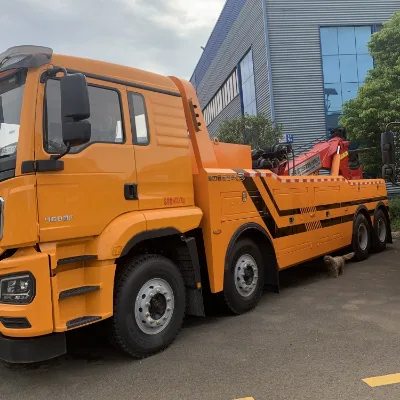
Procuring diesel road recovery tow trucks requires a disciplined approach to verifying technical capabilities against specific operational needs. Buyers must distinguish between light-duty urban recovery units and heavy-duty highway rescue vehicles, as the underlying chassis and hydraulic systems differ significantly. The observed market data indicates a wide spectrum of towing capacities, ranging from 5 tons to 50 tons, which dictates the appropriate vehicle class for your fleet. Understanding these distinctions prevents over-specification, which increases capital expenditure, or under-specification, which leads to operational failures during critical recovery missions.
The sourcing process should begin with a clear definition of the primary use case, such as roadside assistance, construction site logistics, or heavy equipment transport. Each application demands specific configurations, including the type of winch, the presence of a tilt tray, or the number of tow units. For instance, a tilt tray wrecker is suitable for transporting non-running vehicles, while a heavy-duty wrecker with a 50-ton capacity is designed for large commercial trucks. Aligning the vehicle's mechanical attributes with the intended workload ensures that the procurement decision is driven by functional requirements rather than generic specifications, thereby optimizing the total cost of ownership over the vehicle's lifecycle.
Product Scope and Observed Listing Signals
The current market for diesel road recovery tow trucks presents a diverse range of configurations, primarily categorized by their towing tonnage and chassis type. Listings indicate models with towing capacities of 5T, 8T, 30T, and 50T, reflecting the broad spectrum of recovery needs from passenger cars to heavy commercial vehicles. The drive type is predominantly 4x2, which is standard for on-road recovery operations, though buyers should verify if 6x4 or 8x4 configurations are available for off-road or extreme weight scenarios. The observed data also highlights specific models like the Tilt Tray Wrecker and MT5070, suggesting that specialized body styles are common in this category.
Buyers should pay close attention to the engine options and transmission types listed in product specifications. Engines from manufacturers such as Cummins, Weichai, Yuchai, and Isuzu are frequently cited, offering horsepower ranges from 150-250hp up to 251-380HP. The transmission type varies between manual and automatic, with automatic transmissions often preferred for urban environments where frequent stopping and starting occur. Additionally, the steering configuration is typically left-hand drive, but right-hand drive options may be available for specific regional markets. Verifying these core mechanical components ensures that the selected vehicle aligns with local regulatory requirements and operational preferences.
Technical Specifications to Verify
When evaluating technical specifications, the towing capacity must be matched precisely with the maximum weight of the vehicles intended for recovery. A 5T wrecker is suitable for standard passenger cars, while a 30T or 50T unit is necessary for heavy trucks and buses. Buyers should verify the curb weight of the vehicle, which ranges from 3110kg to 7650kg in observed listings, to ensure it does not exceed the legal gross vehicle weight limits of the operating region. The plate bearing weight, noted at 3 tons in some specifications, is another critical metric that determines the load distribution on the chassis and must be confirmed for structural integrity.
Hydraulic system performance and winch specifications are equally important for operational efficiency. The number of tow units, often listed as two, indicates the capability to handle multiple recovery points or simultaneous operations. Buyers should also verify the dimensions of the vehicle, with observed standards ranging from 636019602680mm to 1100025003500mm, to ensure it fits within the operational constraints of the fleet, such as garage sizes or road width restrictions. Tire design, typically tubeless, and certification standards like ECE, GCC, ISO, and DOT should be checked to confirm that the tires meet the safety and performance requirements for the intended operating environment.
Compliance and Safety Documentation
Compliance with international and regional safety standards is a non-negotiable aspect of sourcing diesel road recovery tow trucks. The observed certifications include ISO, CCC, TSEPA, EEC, RoHS, and CE, which indicate adherence to various quality and safety benchmarks. Buyers must ensure that the specific certification required by their local regulatory body is included in the supplier's documentation. For example, EEC certification is essential for vehicles intended for the European Economic Area, while CCC is required for the Chinese market. Verifying these documents prevents legal issues and ensures that the vehicle can be legally registered and operated.
Emission standards are another critical compliance area, with observed standards including Euro Fuel: Gasoline and Euro Fuel: Diesel. Since the core keyword specifies diesel, buyers must confirm that the engine meets the latest Euro emission standards applicable in their region. This involves checking the engine's emission control systems and ensuring that the vehicle is equipped with the necessary sensors and software to monitor and reduce harmful emissions. Additionally, safety features such as the steering system, which is typically left-hand drive, and the presence of adequate braking systems should be verified to ensure the vehicle meets the safety requirements for heavy-duty operations.
Cost Drivers and Commercial Terms
The cost of diesel road recovery tow trucks is influenced by several key factors, including the towing capacity, engine type, and additional features. The observed price range in USD is 5463.65 to 136000, reflecting the significant variation in vehicle specifications. Higher towing capacities, such as 50T, and more powerful engines, like those with 251-380HP, generally command higher prices due to the increased complexity and cost of the components. Buyers should request detailed quotations that break down the cost of the chassis, body, and any optional features to understand the value proposition of each component.
Commercial terms, such as the minimum order quantity (MOQ) and payment terms, also play a crucial role in the procurement process. The observed MOQ range is 1-1, indicating that single-unit purchases are possible, which is beneficial for small fleets or trial orders. However, buyers should negotiate payment terms that align with their cash flow, such as letter of credit or staged payments, to mitigate financial risk. Additionally, the packing method, which includes options like wood, bulk, or container, should be considered as it affects shipping costs and the safety of the vehicle during transit. Verifying these commercial terms ensures that the procurement process is transparent and financially sustainable.
Supplier Qualification and Quality Control
Qualifying suppliers for diesel road recovery tow trucks involves assessing their manufacturing capabilities, quality control processes, and after-sales support. Buyers should request evidence of the supplier's production facilities, including the size of the factory, the number of employees, and the production capacity. This information helps to determine whether the supplier can meet the required delivery timelines and maintain consistent quality across multiple units. Additionally, the supplier's experience in the industry and their track record of delivering similar vehicles to other clients should be evaluated to gauge their reliability and expertise.
Quality control is a critical aspect of supplier qualification, and buyers should request detailed quality control plans that outline the inspection processes at each stage of production. This includes incoming material inspection, in-process quality checks, and final product testing. Buyers should also verify that the supplier has a robust after-sales support system, including warranty terms, spare parts availability, and technical support. The observed data indicates that customization is available, which means that the supplier should be capable of modifying the vehicle to meet specific buyer requirements. Ensuring that the supplier has the necessary capabilities and support structures is essential for a successful procurement process.
Long-Term Procurement Checks
Long-term procurement checks for diesel road recovery tow trucks involve monitoring the vehicle's performance, maintenance requirements, and total cost of ownership over its lifecycle. Buyers should establish a maintenance schedule based on the manufacturer's recommendations and track the vehicle's performance metrics, such as fuel consumption, engine health, and hydraulic system efficiency. Regular maintenance helps to prevent breakdowns and extends the vehicle's operational life, thereby reducing the total cost of ownership. Additionally, buyers should monitor the availability of spare parts and ensure that the supplier can provide them in a timely manner to minimize downtime.
Sustainability and environmental impact are also important considerations in long-term procurement. Buyers should evaluate the vehicle's fuel efficiency and emission levels to ensure that it meets the environmental standards of the operating region. The observed data indicates that the vehicles are equipped with diesel engines, which are generally more fuel-efficient than gasoline engines, but buyers should still verify the specific fuel consumption rates. Additionally, the vehicle's end-of-life disposal and recycling options should be considered to ensure that it is managed in an environmentally responsible manner. By conducting these long-term checks, buyers can ensure that their procurement decisions are aligned with their strategic goals and operational requirements.
FAQs
What towing capacities are available for diesel road recovery tow trucks?
Available towing capacities range from 5T to 50T depending on the specific model configuration. Options include light, medium, and heavy-duty variants with automatic or manual transmissions. Buyers can select units with 30T or 8T plate bearing weights to match their operational requirements and vehicle recovery needs.
Can I customize the diesel road recovery tow truck specifications?
Yes, customization is available for these diesel road recovery tow trucks. Buyers can choose between LHD or RHD steering configurations and select from engine options like Cummins, Weichai, Yuchai, or Isuzu. Color and specific model types, such as tilt tray wreckers, can also be tailored to your needs.
Which certifications apply to these diesel road recovery tow trucks?
These diesel road recovery tow trucks hold multiple certifications including ISOCCC, TSEPA, EEC, RoHS, and CE. Additional tire certifications may include ECE, GCC, ISO, and DOT. These standards ensure compliance with international safety and environmental regulations for global sourcing and deployment.
What is the typical horsepower range for these diesel models?
The horsepower range typically spans from 150-250hp up to 251-380HP. This variation allows selection based on the required towing tonnage and engine capacity, which often falls between 6-8L. Higher horsepower units support heavier loads and more demanding recovery operations.
How are diesel road recovery tow trucks packed for shipping?
Packing methods include wood crates, bulk shipping, RO-RO, or naked packing. Some units are wax polished or waxed before being loaded on board. These options ensure safe transport from origins in China, including Hubei, to international destinations while protecting the vehicle during transit.
What emission standards do these diesel tow trucks meet?
These diesel road recovery tow trucks meet Euro emission standards. The fuel type is specified as diesel, ensuring compliance with modern environmental regulations. This makes them suitable for markets requiring strict emission controls while maintaining the power and reliability needed for heavy-duty recovery tasks.